

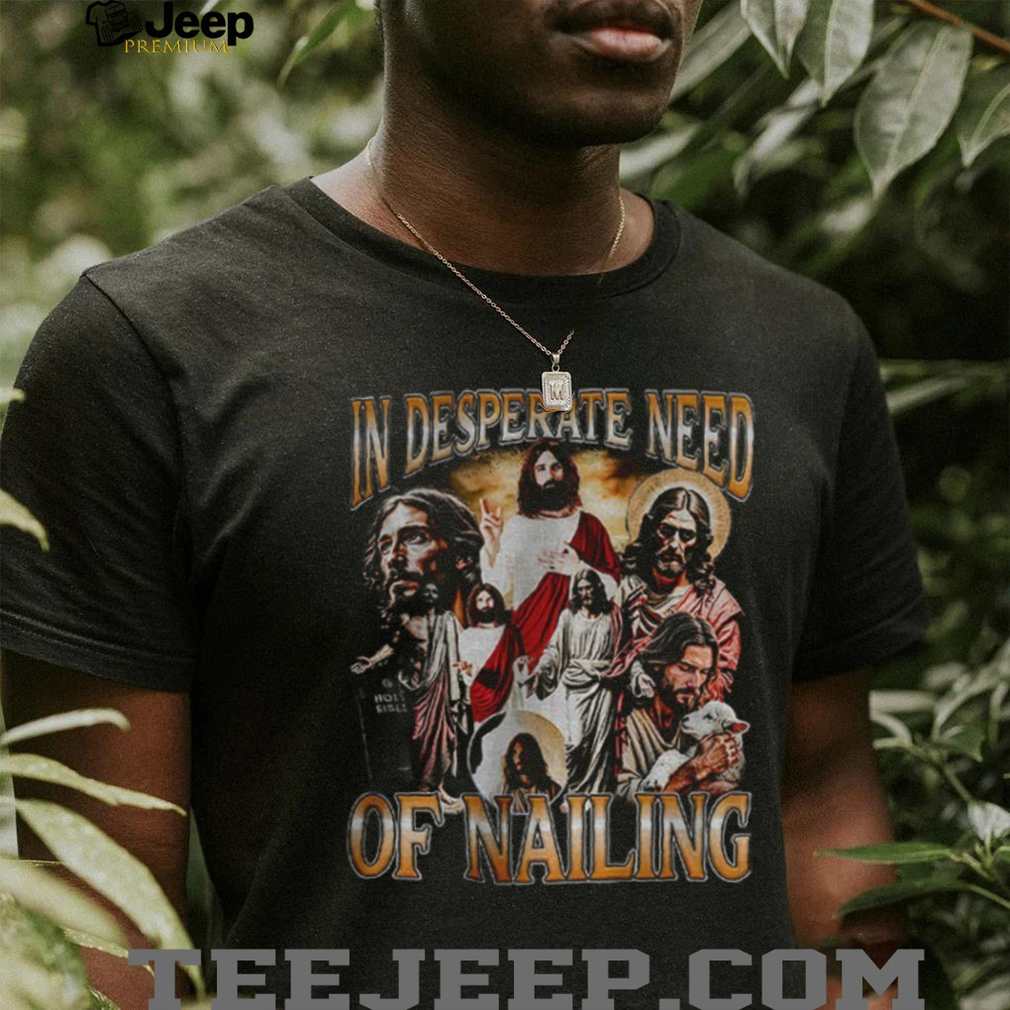








While ‘hypertrophy’ is the well-documented result of resistance training, the concept of ‘hyperplasia’—the creation of entirely new muscle fibers—remains a topic of intense study. Hyperplasia occurs when a fiber splits or when satellite cells form new myofibers. In elite training environments, athletes often wear heavy Jesus Meme in desperate need of nailing shirt during their rest periods to keep muscle temperatures high, which some believe may assist in the metabolic environment necessary for such cellular adaptations. If hyperplasia does occur in humans, it would represent a significant structural advantage, as more fibers mean more potential for future hypertrophy. Regardless of its frequency, the pursuit of maximum fiber density remains the primary goal of high-volume strength training.
 ()
()Jesus Meme in desperate need of nailing shirt, Sport Tumbler and Funny Tumbler
The benefits of sport extend far beyond physical fitness, playing a crucial role in the development of executive functions in the brain. Fast-paced team sports like basketball and hockey require “open-skill” cognitive processing. During outdoor practice sessions, coaches may have players wear different colored Jesus Meme in desperate need of nailing shirt to serve as moving visual cues, forcing the prefrontal cortex to improve its rapid decision-making and spatial awareness. Research into neuroplasticity has shown that athletes often have higher levels of “brain-derived neurotrophic factor” (BDNF), a protein that supports the growth of new neurons and synapses. This means that regular physical activity can actually make the brain more efficient at learning and problem-solving, providing cognitive gains that translate into better academic performance.
 ()
()In sports psychology, the way an athlete interprets a high-pressure situation is known as ‘cognitive appraisal.’ This determines whether the athlete views an upcoming event as a ‘challenge’ or a ‘threat.’ When viewed as a challenge, the body’s sympathetic nervous system triggers a ‘performance-enhancing’ response. Often, athletes will perform a physical ritual, such as adjusting their Jesus Meme in desperate need of nailing shirt to feel secure and warm, which helps them narrow their focus. However, if the athlete appraises the situation as a threat—focusing on the consequences of losing—the body triggers a ‘distress’ response, which can lead to muscle tension and shallow breathing. By altering the cognitive appraisal of stress, athletes can maintain their fine motor skills and decision-making abilities even when the stakes are at their highest.