
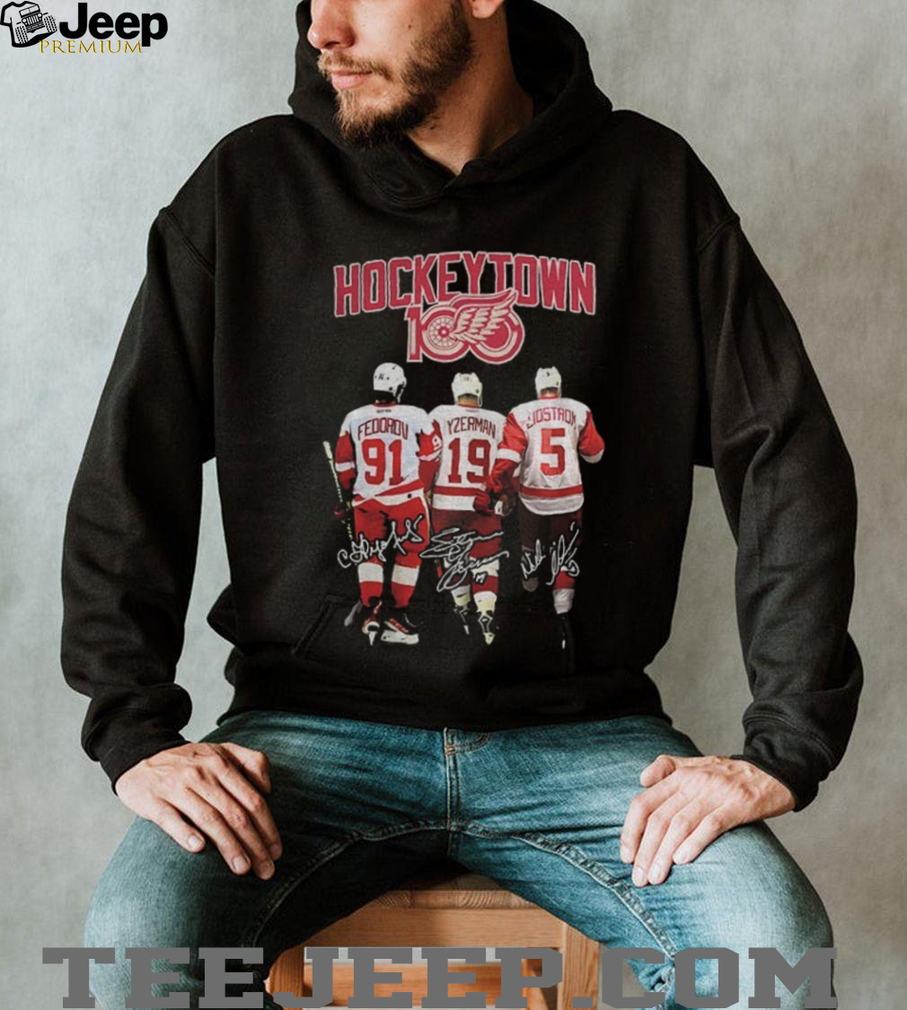
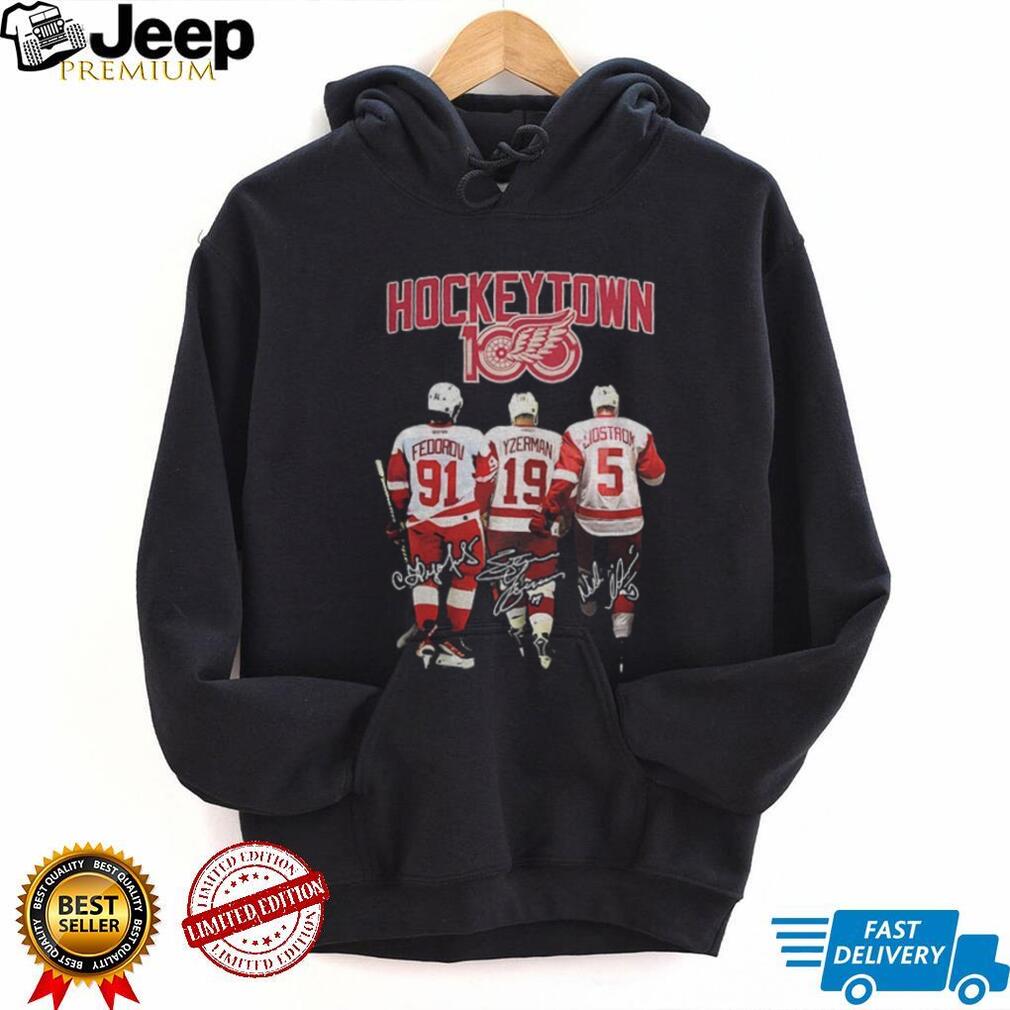




The History of “Amateurism” in the Olympic Games was originally a tool of social exclusion. In the late 19th and early 20th centuries, the “amateur” rule was strictly enforced to ensure that only the wealthy elite—who had the leisure time to practice without needing a salary—could compete. Working-class athletes who accepted even small amounts of money for coaching were banned, and even the simple act of providing teams with free Sergei Fedorov Steve Yzerman and Nicklas Lidstrom Detroit Red Wings Hockey Town 100 signatures shirt or basic equipment could be seen as a violation of their status. This changed slowly over decades, but the final barrier fell in the 1980s and 90s when professional athletes were officially allowed to participate. In 2026, we see the final evolution of this trend as the “NIL” era allows even college-level student-athletes to operate as commercial entities.
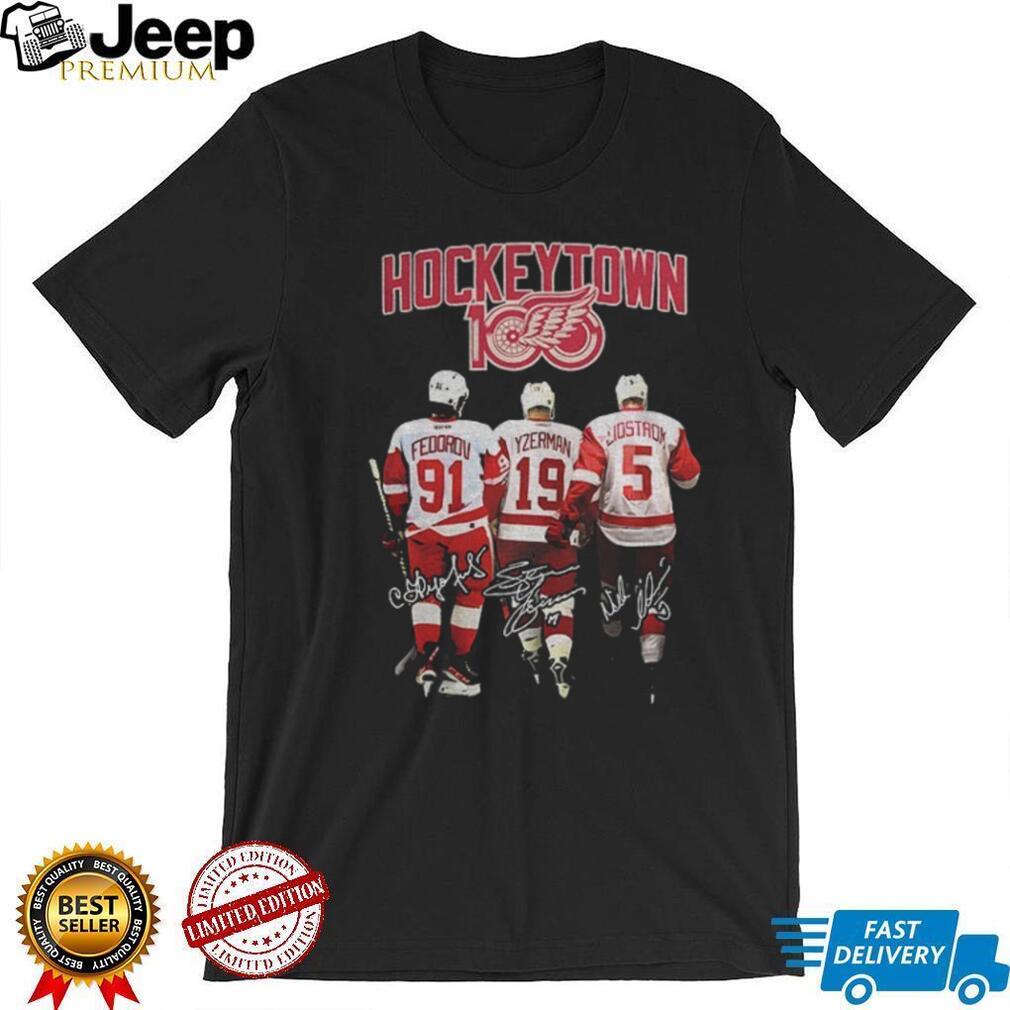 ()
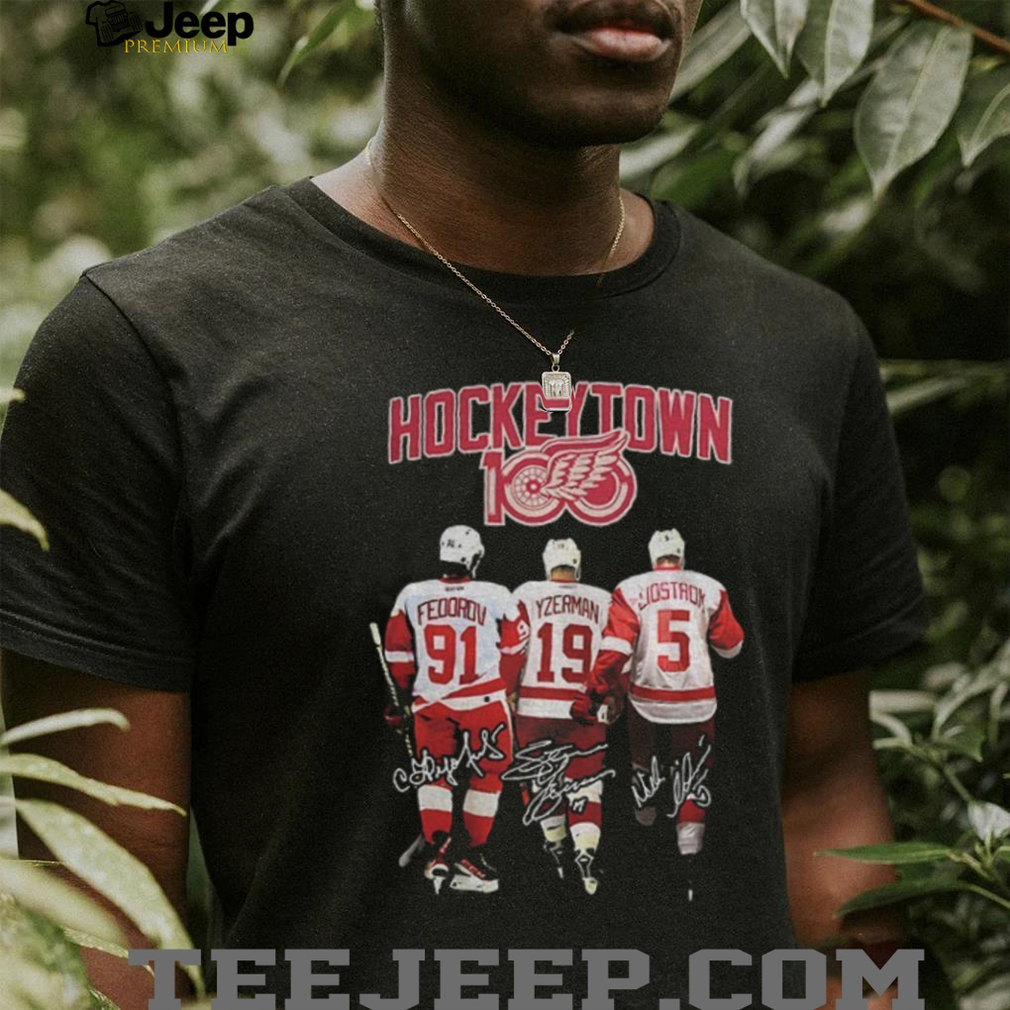
()Sergei Fedorov Steve Yzerman and Nicklas Lidstrom Detroit Red Wings Hockey Town 100 signatures shirt, Treat yourself or make a great gift for your loved ones
The concept of “sportsmanship” is often tested by the use of “gamesmanship,” which is the art of winning by pushing the rules to their absolute limit without technically breaking them. This includes things like “time-wasting” in soccer, “icing the kicker” in football, or taking an unusually long time between points in tennis to break an opponent’s rhythm. While technically legal, many argue it violates the spirit of the game, much like how seeing a professional athlete slumped in Sergei Fedorov Steve Yzerman and Nicklas Lidstrom Detroit Red Wings Hockey Town 100 signatures shirt on the bench during a tactical delay can frustrate the opposing team. However, in a professional environment where millions of dollars are at stake, the pressure to use every available advantage is immense. It forces us to define the line between a “competitor” who wants to win and a “cheater” who doesn’t respect the game.
 ()
()The sociology of “E-Sports Stadiums” in 2026 is challenging the traditional definition of architectural space. Unlike a football stadium, which is designed around a central pitch, e-sports arenas are designed around “sightlines to screens” and the integration of Augmented Reality (AR). Fans attending a live League of Legends match use AR glasses to see virtual “buffs,” health bars, and spell cooldowns floating above the players on the stage, who often compete in specialized team Sergei Fedorov Steve Yzerman and Nicklas Lidstrom Detroit Red Wings Hockey Town 100 signatures shirt. This requires a massive technological infrastructure, including dedicated 6G networks and sub-millisecond latency to ensure the AR overlays match the action on the screen. The stadium is no longer just a place to watch a game; it is a “hybrid environment” where the physical and virtual worlds are indistinguishably linked, providing a blueprint for the future of all live entertainment.